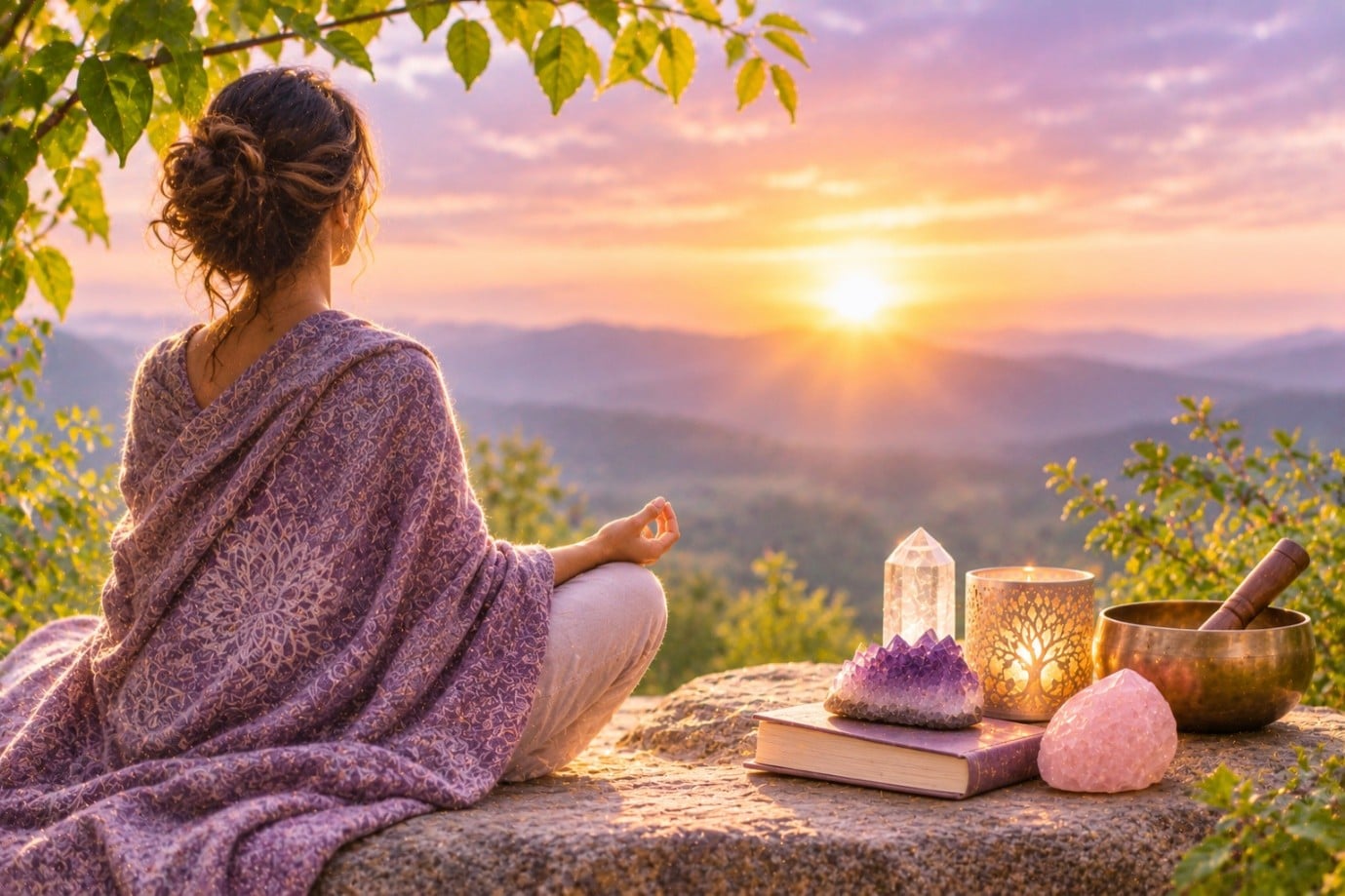
If you've recently become interested in spirituality or personal development, you might be wondering where to begin.
There's certainly no shortage of information available. From meditation and mindfulness to spiritual readings, energy practices, workshops and development groups, it can sometimes feel like there's a lot to understand before you've even started.
You may have questions about what spiritual development actually means, whether you need to follow a particular belief system, or whether it's something you can explore on your own.
The good news is that spiritual development doesn't need to be complicated.
For some people, it's about exploring their beliefs and understanding themselves a little better. For others, it involves meditation, learning about different traditions, connecting with a community or taking time to reflect on what matters most in their lives.
There's no single approach that suits everyone, and you don't need to have unusual experiences or claim particular abilities to begin.
In this article, we'll look at what spiritual development means, some practical ways to get started, how to find learning opportunities and supportive communities, and why maintaining healthy boundaries is an important part of the process.
1. Understanding Spiritual Development: What Does It Actually Mean?
Spiritual development is a broad term that describes the process of exploring personal beliefs, values, meaning and connection.
For some people, spirituality is closely connected to religion or an established faith. For others, it's a personal experience that doesn't involve belonging to any particular religious organisation.
It may include learning about spiritual traditions, developing self-awareness, practising meditation or thinking more deeply about how you want to live your life.
The important thing to understand is that spiritual development doesn't have one fixed definition.
Is spiritual development the same as personal development?
There can be quite a bit of overlap. Personal development generally focuses on areas such as self-awareness, emotional understanding, communication, confidence and everyday habits.
Spiritual development may explore some of these same areas while also considering questions about purpose, personal beliefs, connection and meaning.
For example, someone might begin meditating because they want to spend less time feeling distracted.
Over time, they may become interested in mindfulness, personal values or the spiritual traditions connected with meditation.
Another person might start by attending a spiritual discussion group because they're curious about different beliefs.
Both are examples of exploring spirituality in a way that feels relevant to the individual.
Do you need to believe in psychic abilities or mediumship?
Not at all. Although psychic readings, mediumship and other intuitive practices are sometimes associated with spiritual development, they are only one part of a much broader subject.
You can explore spirituality through meditation, reading, reflection, learning about different cultures or spending time with people who share similar interests.
You don't need to identify as psychic, mediumistic or spiritually gifted.
Is there a right way to develop spiritually?
There isn't one universal path. Different traditions have their own teachings and practices, but no single approach is suitable for everyone.
You may find that certain ideas are meaningful to you, while others don't fit with your beliefs or experiences.
It's perfectly reasonable to ask questions, change your opinions or decide that a particular practice isn't for you.
Spiritual development can be approached as an ongoing opportunity to learn about yourself and the world around you, rather than something you're expected to complete or achieve.
2. Practical Ways to Begin Your Spiritual Development
One of the easiest mistakes to make when exploring spirituality is feeling that you need to do everything at once.
You might come across meditation classes, books, workshops, spiritual readings and development groups, all offering different approaches.
However, getting started can be much simpler than that.
Start by understanding your personal values
Before looking into different practices, it can be helpful to think about what matters most to you.
For example, you might value kindness, honesty, compassion, independence, family, learning or contributing to your community.
Consider how those values influence your everyday decisions.
Are there areas of your life where you'd like to be more patient? Are you looking for a stronger sense of purpose? Would you like to make more time for yourself?
These questions don't require spiritual beliefs or special abilities.
They're simply opportunities to reflect on the person you are and the things you consider important.
Try journalling or personal reflection
Writing down your thoughts can be a useful way to explore what you're learning.
You don't need an expensive journal or a particular method.
You might spend a few minutes reflecting on your day, something you've read or a question you've been thinking about.
For example, you could write about a situation that challenged you, something you're grateful for or a personal value you'd like to put into practice.
Over time, you may notice patterns in your thoughts or become clearer about what interests you.
There is no need to interpret every experience as having a spiritual meaning.
Explore meditation and mindfulness
Meditation is another common starting point.
Different forms of meditation have been practised within religious and cultural traditions for generations, while modern mindfulness exercises are also used in secular wellbeing settings.
For beginners, meditation might simply involve sitting comfortably for a few minutes and paying attention to natural breathing.
Your mind will probably wander, and that's normal.
The aim isn't to stop every thought or achieve a particular spiritual experience.
It's about practising attention and noticing what's happening in the present moment.
If sitting still doesn't suit you, mindful walking or other gentle activities may feel more comfortable.
Read and learn about different traditions
Books, educational articles and introductory classes can help you understand the many ways people approach spirituality.
You might be interested in meditation, spiritual philosophy, cultural traditions, mediumship, Reiki or another area entirely.
Try to explore more than one perspective rather than accepting the first explanation you encounter.
It's also useful to distinguish historical information, personal beliefs and claims that are supported by scientific evidence.
You don't need to agree with everything you learn to find the subject interesting.
The goal is to develop your understanding at a pace that suits you.
3. Exploring Different Learning Paths and Finding Supportive Communities
As your interests develop, you may decide you'd like to explore spirituality with other people.
For some, that means attending a workshop or joining a meditation group. Others prefer reading independently or having occasional conversations with people who share similar interests.
There are several ways to approach this.
Workshops and introductory classes
Workshops can be a useful opportunity to learn about a particular practice in a structured environment.
For example, a beginner's meditation workshop might introduce different approaches to breathing, attention and relaxation.
A spiritual development class may explore personal reflection, spiritual traditions or concepts such as intuition and mediumship.
The content will depend on the teacher and the tradition being presented.
Before attending, check what the class covers, who is teaching it and whether any previous experience is required.
You should also understand the cost, duration and any additional commitments.
But most importantly your spiritual journey starts before you attend any group, class or community. Take notice to who you are drawn to, we usually find ourselves in the right place and around the right people. It’s all divine timing.
Spiritual development groups
Some communities run regular development circles, discussion groups or informal learning sessions.
These may involve meditation, group discussion, reflective activities or exercises associated with particular spiritual beliefs.
A supportive group should provide opportunities to learn, ask questions and participate voluntarily.
You shouldn't feel pressured to share personal experiences or agree with every idea being discussed.
It's also worth remembering that group activities involving psychic or mediumship development are based on spiritual traditions rather than scientifically established supernatural abilities.
Spiritual churches and community organisations
Some people explore spirituality through Spiritualist churches, religious organisations or community groups.
These settings may offer opportunities to learn about established traditions, attend talks or participate in community activities.
Different organisations have different beliefs and expectations, so it's worth finding out what they offer before attending.
You don't need to commit to a particular organisation simply because you've visited once.
Learning independently
Not everyone enjoys group activities, and that's perfectly fine.
You may prefer reading, listening to educational discussions or practising reflection and meditation at home.
Independent learning allows you to explore subjects at your own pace and consider different viewpoints.
However, it's still worth checking the reliability of the information you're using, particularly when someone makes claims about health, supernatural abilities or guaranteed results.
What makes a supportive community?
A good learning environment should feel welcoming and respectful.
People should be able to ask questions, express different opinions and make their own choices.
For example, imagine attending a spiritual development class where you're encouraged to share what you've learned, but you're also free to observe quietly.
The teacher explains their approach, acknowledges different beliefs and doesn't insist that everyone must experience the same thing.
That's quite different from a group that pressures members to accept particular claims, pay for more training or disclose private information.
Finding the right community isn't about choosing the largest or most impressive organisation.
It's about finding an environment where you can learn comfortably and remain independent in your thinking.
4. Common Questions and Misconceptions About Spiritual Development
There are a few common assumptions about spiritual development that can make beginners feel uncertain about where to start.
Do I need to have a spiritual gift?
No. Spiritual development doesn't require psychic abilities, mediumship experiences or any particular talent.
Many people explore spirituality through personal reflection, meditation, learning and community connection.
Is spiritual development connected to religion?
It can be, but it doesn't have to be. Some people approach spirituality through religious traditions, while others explore meaning and personal values without following a religion.
Both approaches are possible.
Do I need a spiritual teacher or mentor?
Not necessarily. A knowledgeable teacher can help explain a tradition or introduce you to a practice, but you can also learn independently.
If you choose to work with someone, look for clear information about their experience, teaching methods and fees.
Will meditation help me develop psychic abilities?
Some spiritual traditions associate meditation with psychic or intuitive development.
However, there is no reliable scientific evidence that meditation creates supernatural abilities.
Meditation may support attention and self-awareness, but results vary, and it isn't necessary to interpret ordinary thoughts or sensations as psychic experiences.
Do I need to buy crystals, cards or other spiritual tools?
No. Some people enjoy using tools as part of their spiritual or reflective practices, but they aren't essential to spiritual development.
You can begin with simple activities such as reading, journalling or spending quiet time reflecting.
How long does spiritual development take?
There isn't a fixed timeframe. Some people explore a particular subject for a few weeks, while others maintain a spiritual or reflective practice throughout their lives.
There's no need to compare your progress with anyone else's.
What if I don't experience anything unusual?
That's perfectly normal. You don't need visions, messages, strong sensations or other unusual experiences to benefit from learning or reflection.
Spiritual development doesn't have to involve extraordinary experiences.
Can spiritual development replace counselling or therapy?
No. Spiritual activities may be personally meaningful, but they shouldn't replace professional mental health care when it's needed.
If you're experiencing significant distress or ongoing difficulties, speak with an appropriately qualified health professional.
5. Healthy Boundaries and Realistic Expectations During Spiritual Development
As with any area of personal learning, it's important to maintain healthy boundaries when exploring spiritual development.
There are many supportive teachers and communities, but it's also worth knowing how to recognise situations that may not be right for you.
Choose learning opportunities that encourage independent thinking.
A teacher or mentor can share their knowledge and experience, but they shouldn't insist that their beliefs are the only correct ones.
You should feel comfortable asking questions, considering different perspectives and reaching your own conclusions.
Be cautious of guaranteed spiritual outcomes.
Some courses may promise to awaken psychic abilities, guarantee spiritual communication or transform your life within a particular timeframe.
These claims should be approached carefully.
There is no reliable scientific evidence that spiritual development training can produce supernatural abilities, and no practitioner can guarantee personal or spiritual outcomes.
Understand the costs before committing.
Before joining a course, workshop or group, check the price, duration, inclusions and cancellation conditions.
You shouldn't feel pressured to enrol immediately or pay for additional training simply because someone suggests you're not progressing quickly enough.
Learning about spirituality doesn't need to be expensive.
Protect your personal information.
Some spiritual development activities involve discussing personal beliefs, emotions or experiences.
You should always have a choice about what you share.
You don't need to disclose sensitive information or participate in exercises that make you uncomfortable.
Recognise fear-based or controlling behaviour.
Be cautious if someone claims that you're spiritually blocked, cursed or at risk unless you follow their instructions.
Similarly, a teacher shouldn't suggest that leaving a group, questioning their beliefs or refusing to pay for more sessions will cause something bad to happen.
These are serious warning signs.
Respect your own emotional wellbeing.
Meditation and reflection can sometimes bring up difficult emotions or memories.
If an activity makes you feel distressed, it's reasonable to stop or choose a different approach.
Intensive meditation isn't suitable for everyone, and anyone experiencing significant psychological distress should seek appropriate professional guidance.
You don't need to push through discomfort to prove that you're developing spiritually.
Keep your everyday responsibilities in balance.
Spiritual interests can be part of your life without becoming the centre of every decision.
It's still important to maintain relationships, look after your health, manage your finances and make practical choices based on reliable information.
Remember that your journey is your own.
You don't need to follow the same path as a friend, a teacher or someone you see online.
Your interests may change over time, and you're allowed to step away from a practice that no longer suits you.
Ultimately, spiritual development should be something you explore by choice, with curiosity, personal responsibility and respect for your own boundaries.
Conclusion: Getting Started With Spiritual Development
Spiritual development can mean different things to different people, but it doesn't need to be complicated or overwhelming.
For some, it begins with meditation or personal reflection. For others, it involves learning about spiritual traditions, exploring personal values or connecting with a supportive community.
There's no single path you need to follow and no requirement to experience unusual abilities or believe in particular ideas.
The most important thing is to approach the subject with curiosity, take time to understand what interests you and make informed choices about the people and practices you explore.
Whether you prefer learning independently or attending classes and workshops, remember that spiritual development is a personal process.
You can take your time, ask questions, maintain your boundaries and decide what feels meaningful to you.
Important Disclaimer
Spiritual development activities, readings and guidance are intended for personal learning, reflection and insight. Spiritual practices and claimed supernatural abilities should not be treated as scientifically established facts or guaranteed outcomes.
Readings and spiritual guidance on Majik Gift are provided by independent practitioners for entertainment and personal insight. They cannot predict the future with certainty and should not be relied on for medical, legal, financial or mental health decisions.
Spiritual development activities are not a substitute for professional healthcare or psychological support. If you have concerns about your physical or mental health, seek advice from an appropriately qualified professional.

